Showing posts with label Art & Architecture. Show all posts

Saturday, October 18, 2025

The Last Voice in Art Appreciation


When it comes to art appreciation, I often wonder why my opinion doesn’t matter. I know why — but it has little to do with how much knowledge I have about the subject. And I am not alone in being inconsequential.

In truth, the perspective of the common man has rarely influenced what is considered valuable or significant in the art world — and that is unlikely to change. Art, much like power in society, is shaped by those with the resources and reach to dictate cultural narratives, regardless of what the majority feels.

When it comes to art criticism, the voice of the man on the street rarely counts if it doesn’t align with that of the elite critics. His thoughts live and die in informal corners — at tea stalls in Kolkata or Trivandrum — but seldom travel beyond.

The psychology of how we perceive art is complex — a code difficult to breach, an algorithm impossible to decipher. There are countless stories of world-class musicians performing incognito in train stations, unnoticed by passersby. Beautiful photographs appear on our screen savers all the time — if only we are ready to notice. Even great poetry, tucked inside a “Good Morning” message, rarely earns a second look. The pattern is everywhere.

Consider Picasso: he never painted for the masses. He stripped art to its essentials, challenged convention, and sought truth through childlike simplicity — much like our prehistoric ancestors might have done on cave walls. Satyajit Ray captured a similar sentiment through Dutta’s character, revealing how true artistry often lies in seeing differently, not merely in seeing more.

Not everyone can — or even wants to — see the world the way Picasso, Ray, or Calatrava saw. And perhaps that’s the quiet beauty of art itself: it doesn’t demand approval; it simply waits for the few who pause, look, and truly see.

Art continues to remind us that beauty isn’t democratic—it reveals itself not to everyone, but to those willing to slow down, observe, and feel beyond the frame.

Saturday, August 10, 2024

Architecture: Balancing Idealism with Real-World Demands


Nothing can be more inspiring for a budding architect than listening to a successful designer explaining designing as an opportunity for magical realism, where things are at once familiar but different. Where arches bow, and the door handles reach out to shake your hand as you approach the space.”

As the architecture students progress through their semesters, they are eager to join the world of professional designers and deliver something unique, something mesmerising. They want to believe that “architecture isn’t just methodology and science; it’s a chance to invent another reality.” However, the reality that awaits them on the other side of university can be quite different from what they have been dreaming of for the past five years.

The idealist will argue that “architecture can’t always be practised as a formula. It’s also an art form that can be infused with personality and emotion.” But in the real world, where project abundance lies, the personality and emotion in question belong to the people who call the shots—the developers!

In the world of development, there are no “seamless blends of fantasy and reality.” The only things that blend seamlessly are demand and supply, and the focus is on who can place the right product in the market before others. What sells most, matters most and what sells today at a premium might have to sell at a discount tomorrow! Drenched in romanticism, the young architect dreams to mingle the “whiffs of once upon a time with hints of tomorrow,” but the market wants the scent of today with the assurance of the day after tomorrow.

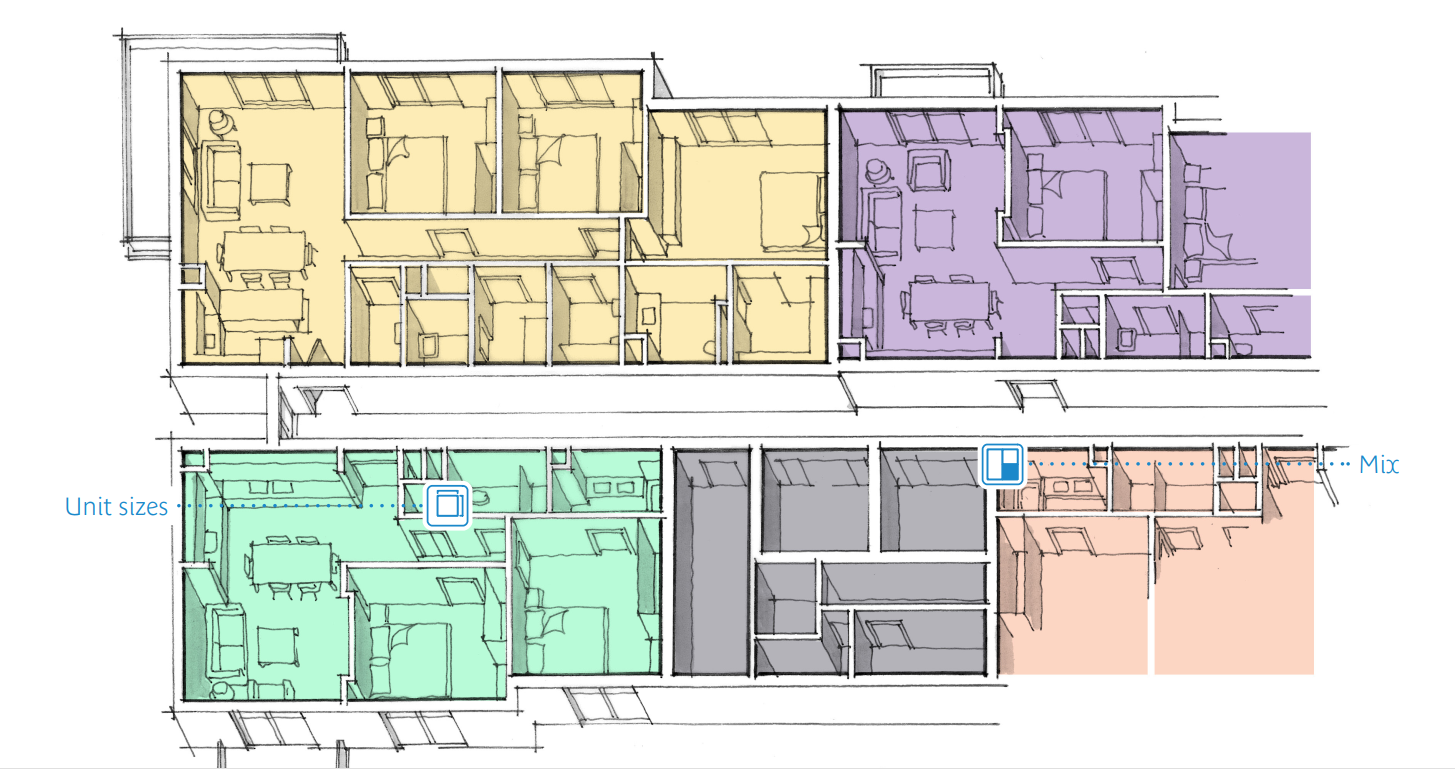
Being in the industry for some time now, this is what I have observed. Developers like the master chefs want to maintain the core recipe of a successful or signature dish. If they were fortunate to discover the magic sauce, why mess with that except for a very high level variation.  Here are the five cardinal rules any successful developer adopts for their commercial residential market offerings:

  1. Unit Size & mix: Study the target audience and establish the ticket price to arrive at the right unit sizes. Maintain the mix that sells. Typically Studio: 5%; 1 Bedroom: 40%;   2 Bedrooms: 45%; and 3-4 Bedrooms/ penthouses etc: 10%; 

  2. Design repetition: Retain the core of a successful design, making only minimal adjustments.

  3. Prime views: If one room can face the sea, it must be the living room.

  4. Maximise typical floors: More typical floors mean more efficient construction, easy for the sales team.

  5. Minimise variation: Less variation in unit types simplifies the construction process, joinery & modular units and appeals to a broader market.

Understanding of each of these rules is crucial for meeting market demands and striking the right balance to ensure commercial success of a project. Details could be the subject for another post and for another day.

While this practical approach may seem disheartening to young architects, it’s essential to understand that creativity and market demands can coexist. Balancing the artistic vision of architecture with the practical demands of the market is a challenging yet essential skill for evolution as a successful professional. By understanding both perspectives, young architects can navigate their careers more effectively and find ways to infuse creativity within the boundaries of reality.

I also post in the LinkedIn page below:

https://www.linkedin.com/pulse/architecture-balancing-idealism-real-world-demands-suman-2njif


Saturday, August 3, 2024

Art in My Room: A Journey Beyond Matching Curtains


Abstract art attempted by me in 2023
Painting by Author

Art is a profound form of expression, a medium through which artists convey emotions, stories, and perspectives. It’s not merely an aesthetic addition to our living spaces; it’s meant to resonate with our innermost feelings and spark reflection. When we buy a piece of art from an artist, we're not just purchasing a decorative item; we’re investing in a journey filled with experimentation, failures, and triumphs. By looking deeper into the art, we can appreciate that path.
Art’s primary purpose is to connect with us on a deeper level. It’s not confined to the limitations of matching our home decor or blending seamlessly with our furniture. Instead, it should provoke thought, evoke emotions, and speak to our soul. Whether it’s a vibrant painting, a poignant sculpture, or an intricate piece of digital art, its value lies in its ability to communicate beyond words.
Every brushstroke, every chisel mark, and every pixel represents hours of dedication, experimentation, and, often, failure. Artists pour their hearts into their work, and each piece is a culmination of their experiences, skills, and emotions. When we commission an artist to create an art piece for us, it brings together pieces of two hearts, and magic happens. 
By acquiring art, we’re supporting this creative process and valuing the unique narrative each artist brings to their craft. It also ensures that the tradition to enrich our society will continue.
While it’s tempting to choose art that complements our home decor, we should consider the stories and emotions that each piece holds. Art can transform a space by adding depth and character that goes beyond color coordination. It can inspire conversations, evoke nostalgia, and even challenge our perceptions. 
"The true beauty of art lies in its ability to transcend the visual and tap into the emotional and intellectual realms."
The next time we consider purchasing a piece of art, let’s look beyond its aesthetic appeal and appreciate the story, effort, and emotions embedded within. Let our spaces be a reflection of the profound connections that art can foster and celebrate the creativity and dedication of the artists who bring these pieces to life.

P.S. Thanks for stopping by! I’d love to hear your thoughts below — your voice keeps the conversation alive. If this reflection on humanity’s future made you pause, enjoy exploring life’s deeper layers, check out Oubaitori (桜梅桃李) — Each Tree Blooms in Its Own Time.

Friday, May 17, 2019

The Legend Never Dies


The world, today is a different place. An era without IM Pei, the internationally recognized and one of the most celebrated architect of our times has begun. He died on Thursday May 16th at the age of 102.

Ieoh Ming Pei was born in Canton (now Guangzhou) on April 26, 1917 to Tsuyee Pei, one of China’s leading bankers and moved to Hong Kong when he was an infant. He recalled that as child of 9, he was fascinated by the construction and knew he wanted to build. At the age of 17, Pei moved to the US of America and in 1940, he was awarded a bachelor’s degree in Architecture from MIT.

Tributes have been pouring in from all over the world, remembering him for a lifetime of designing iconic structures worldwide. In his career stretching more than 70 years, he have amassed an impressive portfolio and the iconic glass pyramid of the louvre in Paris is the poster boy of his legacy.
My favorite masterpiece of this great Master is the Museum of Islamic Art in Doha, Qatar which was completed in 2008. At the ripe age of 91, he came back from his retirement and delved in to history of Islamic Architecture to create one of his most famous cultural landmarks.

A masterpiece positioned on a man-made island and covering a vast area of 45,000 m2. We have been fortunate to spend hours in this vastness and experience the simplicity in the grandeur of the Museum of Islamic Arts. A realization of the magic that simple forms could create when stacked together in the right proportion. The interior spaces and the landscape compliments the Architecture to leave behind his legacy that will continue to inspire generations.

There are plenty of photos of the museum available throughout the internet, I leave a few of my own as well. I also share a video of MIA Park that my daughter had made a few years back.


Top post on IndiBlogger, the biggest community of Indian Bloggers

Tuesday, August 28, 2018

Water For Our Birds - How Designers Can Help


Designers and developers are often criticised for using water features in developments in our urban areas. But during hot summer days in cities like Delhi, these adds to the few remaining water bodies  for our avian species. 


Note: These are my photographs and you are free to use them if you need them.

Thought Provoking

Territories

  Today, while driving to work, I saw a small bird chasing another along the road verge. It was a brief, almost comic scene — wings flutteri...